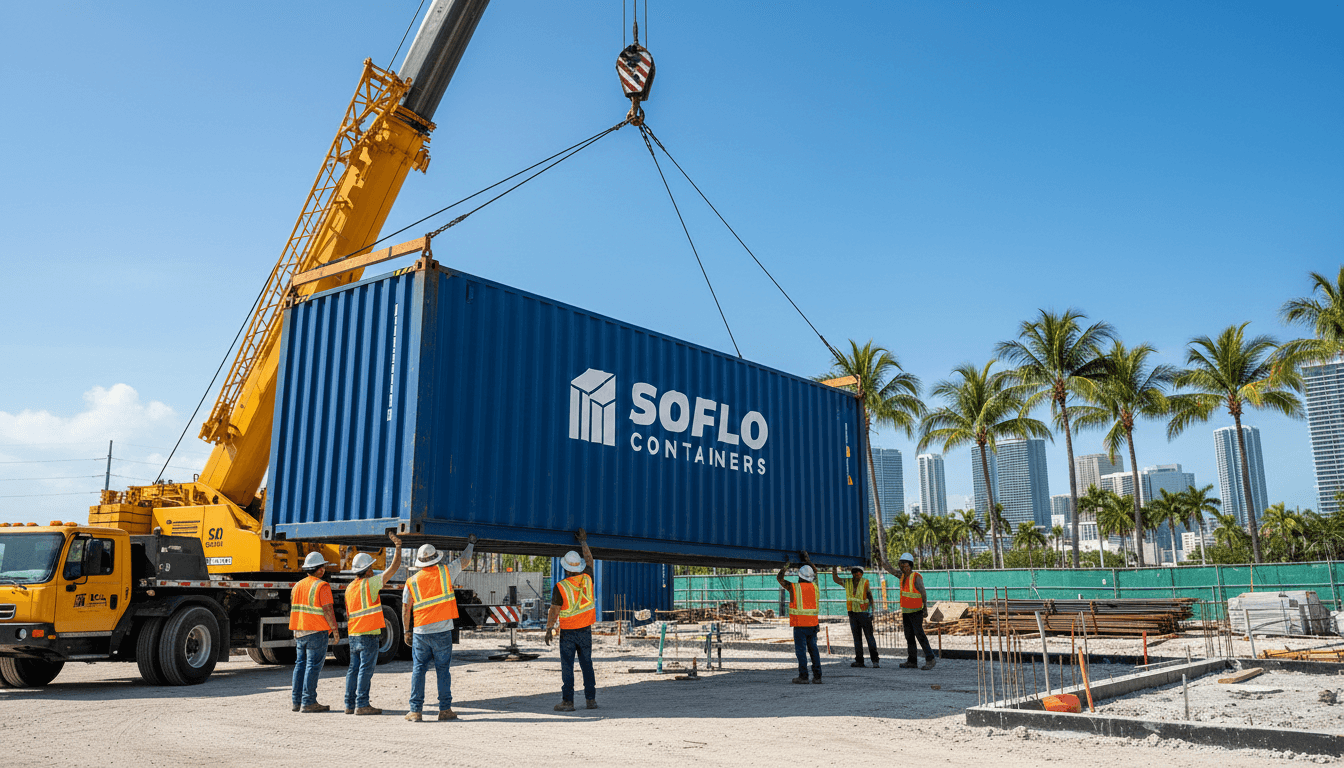
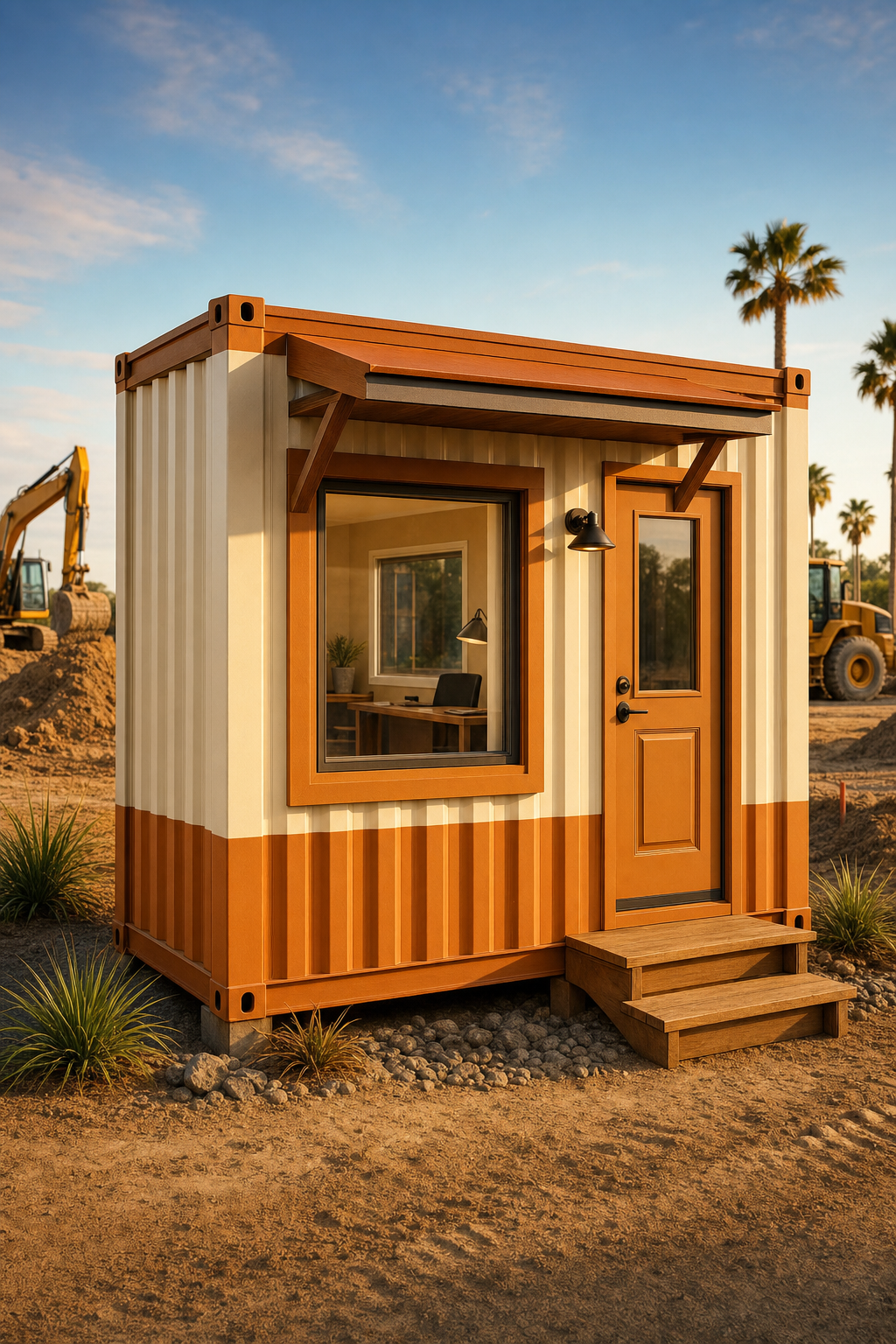
A shipping container office conversion provides a durable and portable workspace solution that typically costs between $15,000 and $60,000 for professional modifications. These projects involve installing critical infrastructure such as HVAC, insulation, and electrical systems to create a functional commercial environment; they offer a faster, more flexible alternative to traditional office construction.
Navigating the commercial real estate market often feels like a choice between exorbitant long-term leases and exhausting multi-year construction delays. For business owners who need immediate, durable, and scalable workspace solutions, traditional build-outs are no longer the most efficient path forward. Shipping container office conversions provide a rugged yet modern alternative that bypasses many conventional headaches. At Soflo Containers, we see how these modular units offer unmatched versatility for everything from construction site hubs to luxury retail extensions. In this guide, we provide a deep dive into the engineering and logistical requirements of a professional conversion. You will discover the climate modifications needed foryour weather profile, an updated cost breakdown for the 2025 and 2026 fiscal years, and the critical permitting steps required to keep your modular office fully compliant and operational.
Why Businesses Are Turning to Shipping Container Office Conversions
The commercial landscape is increasingly defined by the need for rapid, adaptive infrastructure. Local businesses are moving away from traditional permanent construction for their satellite sites. A professional shipping container office conversion offers a strategic alternative for construction sites, logistics depots, and boutique retail spaces that require immediate occupancy. Unlike a standard storage box, these units are fully engineered workspaces with high-performance insulation, integrated electrical systems, and modern climate control.
The shift toward modularity is driven by specific demands. In a climate prone to severe weather, the inherent grade durability of an ISO steel container provides a level of security that traditional trailers cannot match. Furthermore, the mobility of these units allows a firm to treat its office as a portable asset, relocating it between job sites as projects evolve. This speed of deployment allows businesses to bypass the lengthy timelines associated with ground-up brick-and-mortar builds.
Soflo Containers is a dedicated partner in this space, offering new and used container sales tailored to your region's rigorous standards. As experts in professional remodeling services, we bridge the gap between heavy-duty cargo equipment and high-end commercial interiors. Our team understands that a successful buildout requires more than aesthetics; it requires deep knowledge of structural integrity and local environmental factors. Learn more about Soflo Containers and our commitment to providing durable, functional modular solutions for your specific market.
The Step by Step Process of Converting a Shipping Container into a Professional Office

Converting a raw steel box into a functional workspace requires a precise technical workflow to ensure both longevity and safety. The process begins with selecting the right shell, which significantly affects the final look and maintenance needs. For high-end commercial builds, we typically recommend one-trip containers. These units have only carried a single load across the ocean and arrive in pristine condition. Used containers are a cost effective choice for rugged site offices, though they often require additional preparation to address surface rust or minor dings.
Once you select the shell, the most critical phase is structural modification. This answers the fundamental question of how you convert a shipping container; you must strategically remove steel for windows, personnel doors, or glass storefronts. However, because ISO containers are monocoque structures, the corrugated walls provide the unit's strength. A professional must reinforce every opening with steel tubing to prevent the roof from sagging or the frame from twisting.
After the structural integrity is secured, the interior build out follows a specific sequence:
Framing and Insulation: Install vertical studs to create a cavity for utilities. In specific climates, foam panel insulation is the gold standard because it serves as both a thermal barrier and a moisture block.
Electrical and HVAC: Next, we route conduits for data, power, and lighting. We also integrate dedicated circuits for mini-split HVAC systems, which are essential for maintaining a professional environment.
Interior Finishes: This final stage involves installing commercial-grade flooring and lighting fixtures.
Working with a team experienced in professional remodeling services ensures that these phases are executed without compromising the container's inherent durability. By managing the workflow from new and used container sales through to the final coat of paint, we transform industrial equipment into a high-performance asset. If you want to learn more about Soflo Containers and our specific fabrication standards, our team can provide detailed specifications for each phase of the build.
Designing for the climate profile of your location: Essential Climate Modifications
Climate presents unique engineering hurdles that can turn a poorly modified container into a stifling environment. The primary challenge is radiant heat and brutal cold; an uninsulated steel shell in the Miami sun quickly exceeds 120 degrees Fahrenheit. In Wisconsin, temperatures can drop well below zero. To combat this, a professional shipping container office conversion must utilize closed-cell foam insulated panels. Unlike traditional fiberglass batts, insulated panels provide a high R-value barrier, the single most important investment for maintaining a consistent internal temperature while minimizing energy costs.
Climate control requires a shift away from residential style solutions. Standard window AC units often struggle with the high humidity levels found in logistics yards and coastal sites; they are also prone to leaking and creating structural weak points. We recommend high-efficiency mini-split systems for our professional remodeling services. These units offer superior dehumidification and operate quietly, which is essential for a productive office setting.
Modification Component | Recommended Specification | Benefit for your environment. |
|---|---|---|
Insulation | Closed-cell (2"+) panels | Prevents condensation and rejects radiant heat |
HVAC | Ductless Mini-Split System | Energy efficiency and superior humidity control |
Exterior Coating | Marine-grade DTM (Direct to Metal) | Resists salt air corrosion and UV degradation |
Interior Barrier | Integrated Vapor Shield | Prevents mold growth in high-humidity zones |
Coastal proximity also requires advanced corrosion management. Containers located near the coast face constant exposure to salt air. We treat all new and used container sales with marine-grade anti-corrosive coatings and ensure all structural penetrations are sealed with industrial-grade flashing. By addressing these geographic realities during the design phase, about Soflo Containers ensures your mobile asset remains a comfortable, professional workspace for years to come.
Types of Container Offices: From Construction Site Units to Commercial Retail Spaces
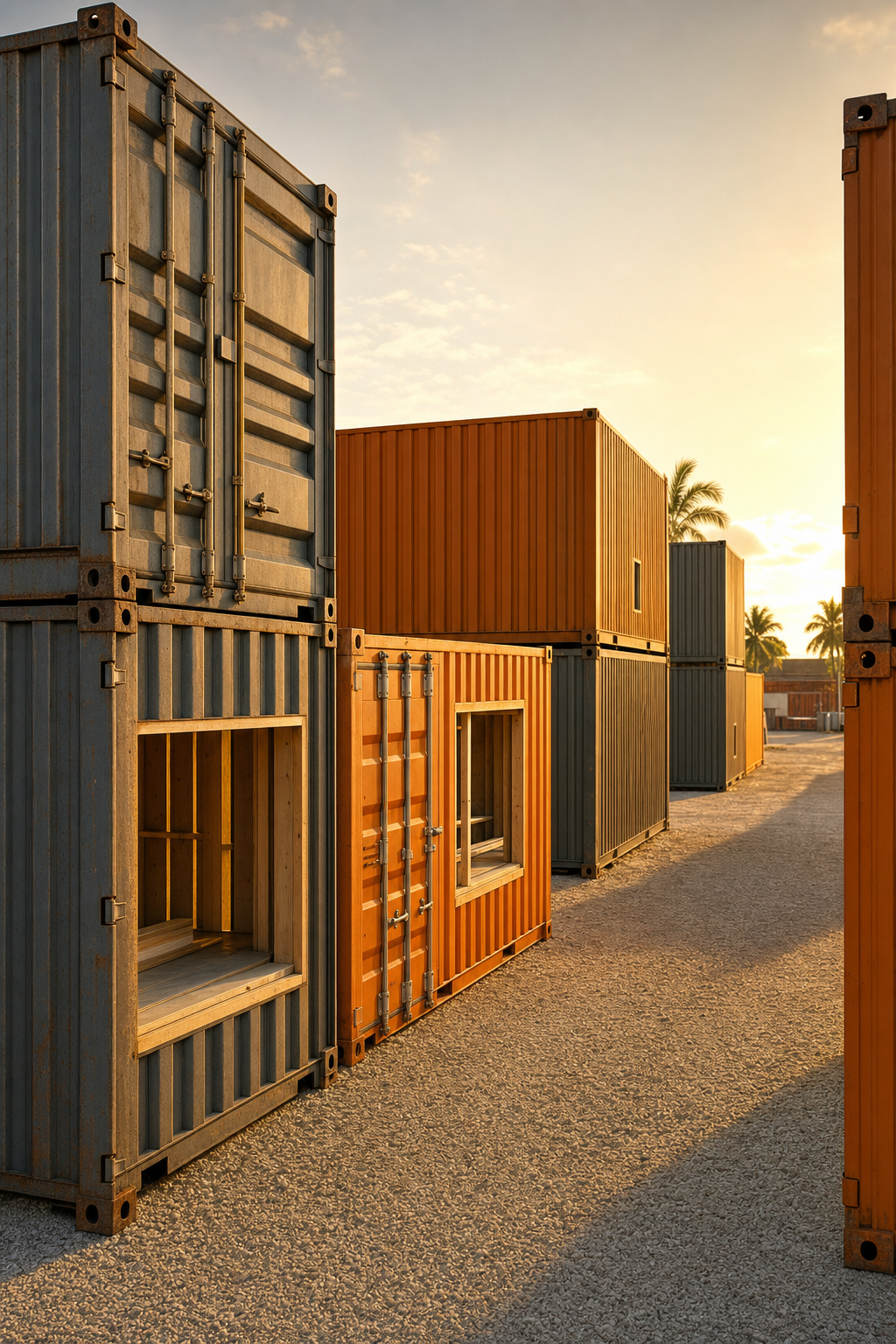
The functional application of a shipping container office conversion dictates its layout and finish level. Selecting the right configuration depends on the intended footprint and the level of public interaction expected.
Construction Site Offices are typically built using 20ft units, offering roughly 160 square feet of rugged, mobile workspace. These units prioritize utility; they often feature industrial-grade flooring, built-in plan tables, and heavy-duty workstations. They are designed to be moved frequently between job sites without damaging the interior infrastructure.
Sales and Retail Offices move toward high-end aesthetics. Utilizing 40ft high cube containers provides 320 square feet of space, allowing for ADA-compliant restrooms and private meeting areas. These customer-facing environments often incorporate full-height glass storefront doors and premium interior cladding. When a business invests in professional remodeling services, these units become sophisticated brand extensions rather than just temporary shelters.
Back-of-House Logistics Offices serve as the nerve center for depot fleet management. These are often placed in high-traffic industrial yards where space is at a premium. By leveraging new and used container sales, companies can deploy these units quickly to manage dispatch and administrative tasks directly on the tarmac.
Office Type | Standard Size | Primary Features | Best Use Case |
|---|---|---|---|
Construction Site | 20ft Standard | Built-in desks, steel personnel doors | Active job sites and temporary staging |
Sales & Retail | 40ft High Cube | Glass facades, recessed lighting | Real estate galleries and pop-up shops |
Logistics Depot | 20ft or 40ft | High-visibility windows, data ports | Fleet management and terminal dispatch |
Our team about Soflo Containers helps clients navigate these choices by analyzing site constraints and operational workflows. We ensure the chosen footprint matches the intended workforce density while maintaining the structural integrity needed for South Florida operations.
Cost Breakdown for Shipping Container Office Conversions in 2025 and 2026
While a modular office has a smaller footprint than traditional construction, the budget for a professional shipping container office conversion is driven by the complexity of the interior buildout and the quality of the raw shell. For 2025 and 2026, Business owners should expect three primary pricing tiers based on their operational requirements and finish levels.
Investment Tier | Typical Budget | Specifications & Features |
|---|---|---|
Basic Site Office | $15,000 – $25,000 | Used 20ft shell, durable vinyl flooring, basic AC, standard electrical |
Mid-Range Commercial | $30,000 – $50,000 | One-trip shell, spray foam insulation, mini-split HVAC, integrated data ports |
High-End Turnkey | $60,000 and up | 40ft High Cube, glass storefronts, ADA restrooms, premium cladding |
The entry-level tier typically uses new and used container sales, focusing on used shells that offer significant savings for rugged construction-site needs where aesthetics are secondary to utility. In contrast, mid- and high-range units use professional remodeling services to achieve a refined, architectural look suitable for customer-facing environments or executive suites.
Several factors influence these figures beyond the shell price. Structural reinforcement for windows and doors requires skilled welding, as maintaining the steel's monocoque integrity is non-negotiable for safety. Additionally, logistics add a specific cost layer; delivering a 40ft unit into a tight logistics yard or onto a job site requires specialized tilt-bed trailers and occasionally precise crane placement. Material quality also plays a critical role. Choosing high-performance marine-grade coatings and closed-cell foam panels increases the initial outlay but protects the asset from the humidity and salt air that define the region. By consulting with the team about Soflo Containers, business owners can obtain a detailed quote that accounts for these regional variables and specific site delivery constraints.

Common Pitfalls in DIY Container Office Projects
Taking a DIY approach to a shipping container office conversion often leads to technical failures that exceed the initial savings. A frequent error is purchasing a used shell without a professional inspection. Units that appear functional may hide significant floor rot or structural rust that requires over 2,000 dollars in remediation before framing can even begin. Our team about Soflo Containers vets every unit to ensure structural integrity from the start.